Vintech by R.P. Rivestimenti Plastici s.r.l.: the answer to the environmental challenges of durable plastic packaging

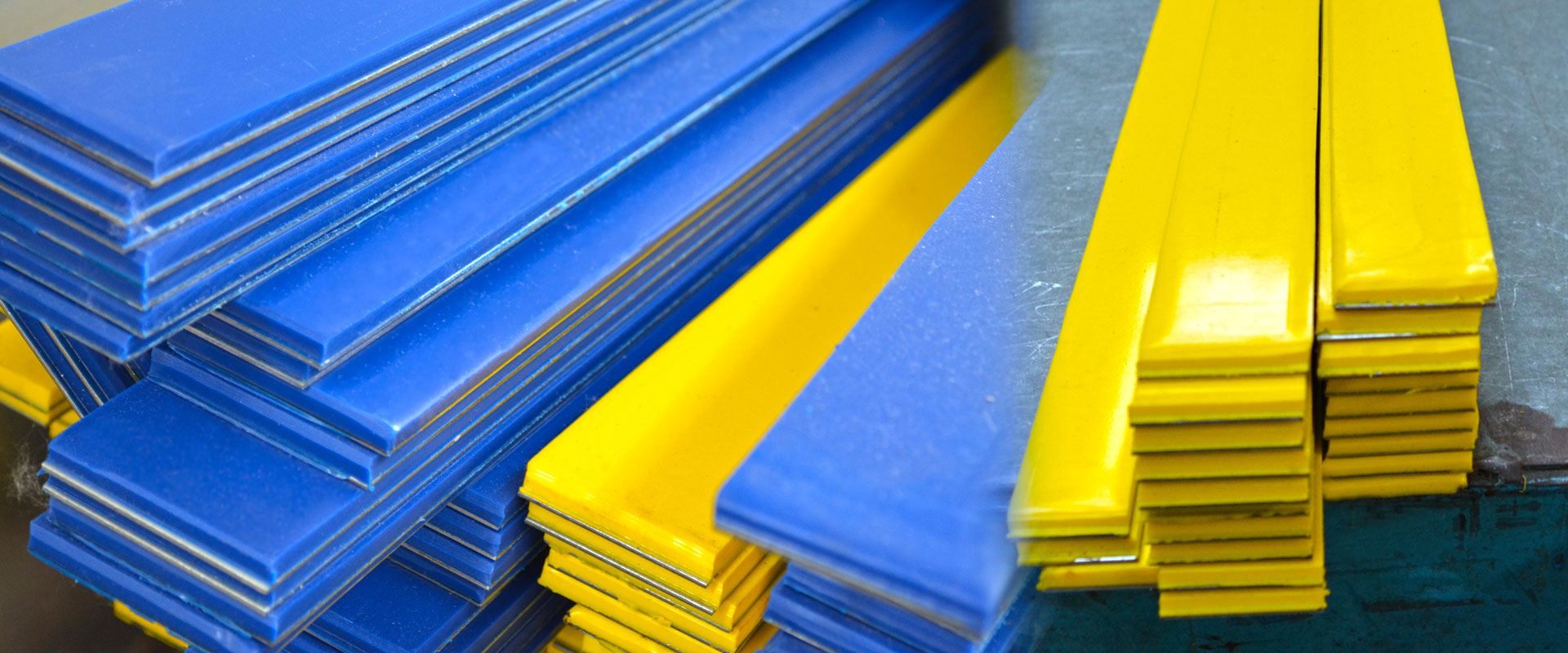
Strisce protettive e bandelle antiscivolo per trasporti

Despite plastic packaging representing an increasingly urgent environmental challenge, R.P. Rivestimenti Plastici s.r.l. offers an innovative and more durable solution.

These are not just packaging or transport protections, but versatile and durable solutions offering a backing and support for the packaging.
Our Vintech product (belonging to the PVC category), complies with international regulations and provides durable solutions for protective coatings on metal substrates. Through its commitment to sustainability and responsible waste management, the company is as an ideal partner for addressing the problem of disposable packaging as it offers reusable and versatile solutions.

New EU packaging regulations require recycling

Recently, the European Union approved a new regulation aimed at addressing the growing problem of packaging waste and promoting the circular economy by avoiding single-use solutions as much as possible.

These provisions are forcing many companies to review their logistics and transport dynamics from a preventive and ecological perspective. We are clearly facing a change of perspective that requires the adoption of new rules and procedures, and to conceive and devise alternative solutions for packaging, transport and/or preservation and storage of goods.

Making packaging in metal, i.e.,  iron, aluminium, steel and other alloys, can be a valid idea for recycling but not always compatible with transport that generates constant friction, vibrations and oscillations of the material.

The plastic/vinyl material called Vintech is the ideal solution for coating or protecting a metal object while ensuring that it doesn’t damage the material with which it will then be in contact.

The new rules are establishing specific packaging reduction targets with incremental percentages of 5% by 2030, 10% by 2035 and 15% by 2040.
Therefore, these provisions mark an ecological trend that will be consolidated in the medium to long term.
In particular, the EU aims to drastically reduce plastic packaging waste and, therefore, has introduced specific measures to limit waste or improper management of the same, such as the maximum proportion of empty space of 50% in multiple packaging and for electronic commerce.

From 1 January 2030, some types of plastic packaging will be banned , especially single use ones, including those for unprocessed fresh fruits and vegetables, foods and beverages consumed in bars and restaurants, single portions such as condiments and sauces, small packaging used in hotels and ultralight plastic bags.
Moreover, perfluoroalkyl substances (PFAS), known as “eternal pollutants“, will be banned in packaging in contact with food in order to avoid harmful health effects.

The new rules also include reuse targets for alcoholic and non-alcoholic beverage packaging, multiple packaging, and for sale and transport, to be achieved by 2030.
Distributors of takeaway food and beverages will also need to offer consumers the option to use their own containers and commit to providing at least 10% of products in reusable packaging by 2030.

To ensure recyclability, all packaging as well as associated supports will have to comply with strict criteria, with the exception of materials such as light wood, cork, fabrics, rubber, ceramics, china and wax. By 2029, 90% of single-use metal and plastic containers and packaging for beverages up to three litres must be collected separately through deposit return systems or other equivalent solutions, which will significantly restrict the market and various operators.

Therefore, companies must carefully monitor and check the packaging used.
Recyclable metal and plastic containers  will soon be back in use and could actually represent a breakthrough in both practical and economic terms.

At R.P., we have been working for over 30 years managing and assisting customers in finding the most suitable solutions for the transport of goods, objects and items of various sizes through metal protection processes that guarantee the combination of advantages in terms of durability and performance.
 

The issue of disposable packaging

Disposable packaging represents a significant challenge for both the environment and the planet’s economy, which is increasingly undermined by the most common forms of pollution.

In fact, most of the virgin materials used in the European Union are used for packaging: 40% of plastic and 50% of paper. Moreover, packaging makes up 36% of the solid waste of cities resulting in considerable production, collection and management costs.
The growing production of packaging, combined with low reuse, collection and recycling rates, greatly hinders the transition to a low-carbon circular economy .
This issue has global implications that go far beyond Europe, but some viable solutions can be found here to propose to less virtuous countries as well.

The new European legislation aims to reduce the negative impact of packaging on the environment and human health by establishing standards for the entire life cycle of packaging. These rules promote the design and production of packaging that can be reused or recycled with high quality, minimising their environmental impact. In particular, as one of the materials with the highest carbon intensity, plastic should be used with caution.

Recycling plastic consumes about five times less fossil fuels than incinerating it with energy recovery.

Since 1 January 2021, the EU has introduced a national contribution proportional to the amount of non-recycled plastic packaging waste in each Member State, thus incentivising the reduction of single-use plastic solutions and promoting recycling.

Investing in durable packaging supports offers numerous advantages:

  • Cost reduction: although the initial investment may be higher, durable supports reduce costs in the long run as they can be reused multiple times.

  • Environmental sustainability: the use of reusable materials reduces the amount of waste and the environmental impact.

  • Regulatory compliance: by adapting to new EU regulations fines and sanctions can be avoided, as well as improving the image of the company as a responsible entity.

  • Social impact: companies that promote recycling and reuse activities by adopting more sustainable models are investing in durable solutions and therefore, are perceived and recognised positively by stakeholders.

Our contribution can change your packaging

At R.P. Rivestimenti Plastici s.r.l. we are fully aware of the issues related to the irresponsible use of plastic and the harm attributed to it, both to animals and the environment, due to improper use and excessive consumption.
In fact, plastic would not be a problem in itself if it were used correctly or according to well-defined criteria.

Although our company, has been using various plastic materials for more than 30 years, we consider ourselves a virtuous and positive example of how these elements can coexist.

Among the most versatile materials is a plastic of our own production, that we decided to create and standardise internally to raise standards and monitor the quality of the materials used and the accredited suppliers.

Our Vintech, a specific type of PVC that we produce in various colours, thicknesses and softness, is notoriously used for protective and preventive applications on metal substrates of various kinds, such as ferrous alloys, light alloys (Al) and copper alloys. These materials are used in various sectors, including the coating of racks, tilting devices, springs, clamps, tools, or goods transport hooks, as well as for technological and decorative purposes.

Our Vintech products are made with materials that comply with international regulations, including Regulation (EC) 1272/2008 (CLP) and subsequent amendments. They can be considered support articles for the transport of goods and not actual packaging, in line with Regulation (EC) 1907/2006, thus ensuring compliance with the rules of the sector and the necessary safety requirements. Moreover, our products don’t contain substances classified as hazardous to health or the environment in accordance with Regulation (EC) 1272/2008 (CLP).

Despite the production of plastic items, we are committed to creating durable and reusable products, avoiding single-use solutions. Our products are designed to last a long time and can be removed and reapplied to metals, minimising the environmental impact and optimising the life cycle of the product.
We manage the plastic removal and disposal process internally, ensuring that it gets done through a sustainable and responsible process, so that customers can avoid any waste management problems. Indeed, many items can be unpainted and plasticised again.

To tackle the problem of disposable packaging, it’s essential for customers to understand the importance of choosing more sustainable alternatives. Disposable packaging, especially plastic packaging, tends to quickly become waste, generating significant management costs and environmental damage. Instead, the combination of durable materials such as metal and sturdy plastic, can create packaging that improves performance in the long run and reduces environmental costs.

Investing in durable packaging not only helps reduce environmental impact, but also offers a long-term economic advantage, creating solutions that improve product performance and extend product life. Our dedication to sustainable solutions and our compliance with European regulations demonstrate our commitment to operating in a responsible and conscientious manner.

Examples of durable Vintech solutions:

  • Vintech protective strips: these strips, composed of a metal base and a layer of PVC of variable thickness, are used to protect goods during transport; they can be reused multiple times.
  • Rubber and plastic caps and stoppers: Vintech PVC protective caps offer versatility and reliability to seal, protect, mask and coat metal parts such as levers and handles.
  • Anti-wear coating: Anti-wear coating improves the strength and surface resistance of metallic materials, reducing abrasion and mechanical wear, even in corrosive environments or where exposed to harmful chemicals.


Choose sustainability and quality with our Vintech products.
Invest in durable and reusable solutions to reduce your environmental impact and improve the performance of your products.

Contact us today and find out how we can help you make a difference in your industry.