- Flexibility and softness: rubber features extraordinary elasticity and flexibility, allowing it to bend and deform under the action of external forces and return to its original shape.
Conversely, PVC features greater hardness, rigidity and mechanical strength.
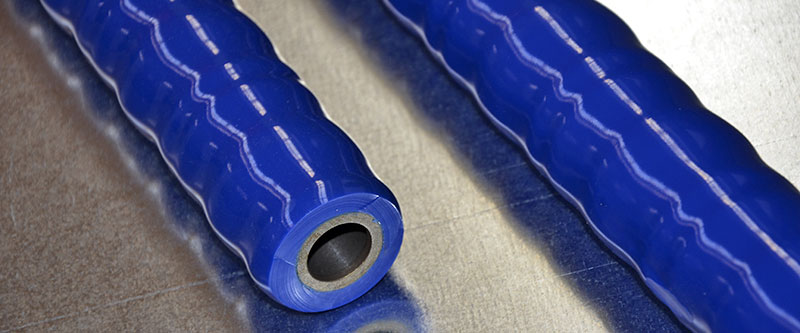
Vintech, on the other hand, stands out not only for the properties of vinyl but also for its exceptional durability. In fact, it is designed to offer high flexibility and versatility, adapting to a wide range of industrial applications. This combination of strength and flexibility makes it an ideal choice for multiple uses in different industries.
- Resistance to weathering agents: PVC and rubber are materials subject to the influence of atmospheric changes, but offer properties suitable for different conditions.
PVC, a synthetic material, is highly resistant to sunlight, weathering and corrosion well, while rubber can be more vulnerable to damage caused by UV rays and other atmospheric elements. However, there are variants of rubber, such as silicone rubber, designed to better withstand the elements.
Vintech is also specially designed to withstand external environmental conditions, such as humidity, rain and temperature variations, and is ideal for protecting machinery, plants, industrial structures and goods from moisture, corrosion, scratches and impacts.
- Chemical resistance: PVC is generally resistant to many chemical agents, such as oils, fats, acids and bases, making it suitable for applications where good resistance to such agents is required.
Rubber is less resistant than PVC due to its more open and disordered molecular structure, which makes it more susceptible to corrosion and chemical degradation. Vintech is renowned for its exceptional strength and durability, making it an ideal choice for industrial environments subject to mechanical and chemical stresses, as it combines the chemical resistance of PVC with the flexibility of rubber.
- Cost: The cost of PVC versus rubber can vary based on several factors, including material quality, quantities required, and application specifications.
In general, PVC tends to be less expensive than rubber in many situations, especially considering the cost of the base material and production processes. However, there are exceptions to the above, such as in the case of specialty or high-quality rubbers that can be more expensive than standard PVC.
Considering the challenges related to cost and quality, an ideal solution that balances both aspects is Vintech, offering exceptional value in terms of performance, durability, and resistance.
Investing in products featuring Vintech applications results in a reliable and durable product and in a cost-effective solution in the long term, which aims to reduce maintenance and replacement costs.
Eco-compatibility: Natural rubber can be considered relatively eco-friendly if it comes from sustainable sources, contributing to the conservation of tropical forests and reducing dependence on non-renewable sources.
On the other hand, PVC raises environmental concerns due to its oil-derived production and non-biodegradable disposal.
However, PVC is progressing towards greater sustainability through recycling techniques and development of more eco-friendly formulas, thus mitigating its environmental impact.
Vintech demonstrates a commitment to environmental regulations. In many uses, it is designed to be reusable or recyclable, thus offering a sustainable option for industrial applications even on a large scale. Moreover, it can be formulated as to ensure a responsible and environmentally friendly approach in the use of this material through the regeneration of obsolete metal items.